Recreating the Compukit UK101 (2)
My first goal was to use the Cyclone II FPGA to build a minimal 4K replica. I made up a small circuit board to attach the resistors necessary for the PS/2 keyboard interface and video output. Once I’d figured out how to install and use the Quartus II software (The free ‘web edition’ of version 13.0sp1 is required) and the USB blaster programmer the project worked first time.

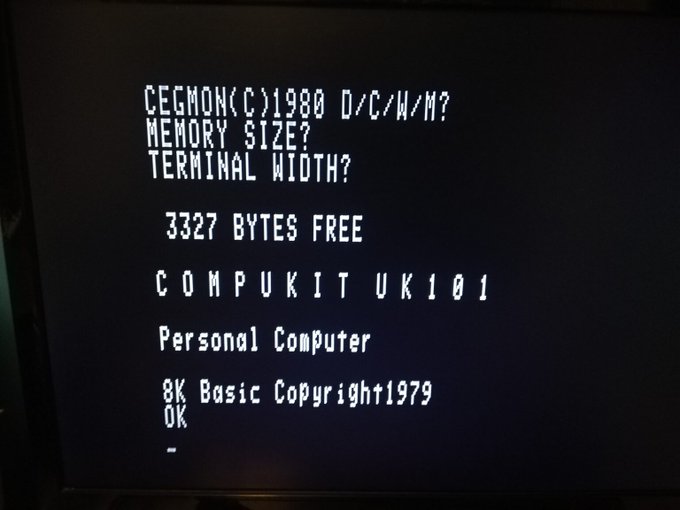
The main difficulty with the initial hardware build was the keyboard. I’d used a Periboard-409 mini PS/2 keyboard – but more often than not it refused to work. Digging into various corners of the internet turned up the information that this keyboard is not strictly PS/2 compatible on startup. It waits for a host escape sequence sent by a ‘standard’ Windows BIOS that shouldn’t be required before returning keystrokes. Shorting out random pins on the PS/2 connector (not advised!) often kicked the keyboard into life, but it obviously wasn’t an ideal solution.
A cheap (£10) unbranded OS/2 mini-keyboard permanently resolved the issue, but in the couple of weeks I spent trying to get the project to work with the Periboard I learned more about PS/2 keyboard programming and VHDL code than I ever thought I’d need to. This early VHDL experience eventually became useful when I put together my final version of the hardware – more on this in a later post.
When I was experimenting with my RC2014 a couple of years ago I wrote a reasonably portable BASIC prime number generator. Very few tweaks were needed to get it working on the UK101 and it was a useful check to get some confidence in what I’d built. The code as written takes around 40 seconds to find all the primes less than 1,000.