Pico MZ Release 3.2
This release of Pico MZ is likely to be the last this year, unless I happen to find a critical bug that I absolutely need to fix! I'm busy clearing the decks in time for Christmas, which includes taking part in Advent of Code. I'll probably be using Modern Fortran as my language of choice this year, but I'll argue that even Modern Fortran still counts as retro ...
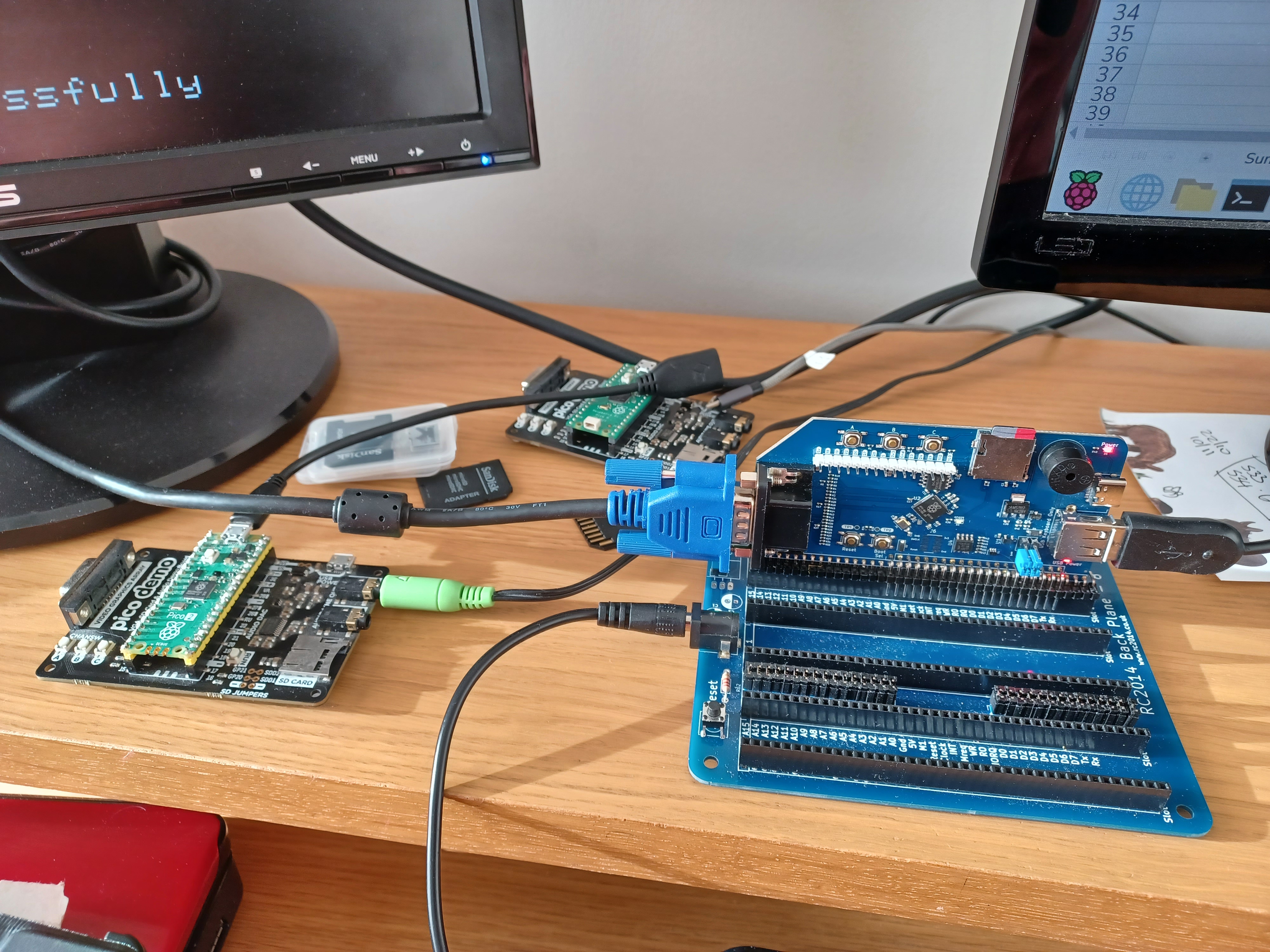
Anyway, back to Pico MZ 3.2. This release focuses mostly on enhancements rather than bug fixes, as the remaining bugs that I do know of are either low severity and/or feel impossible to resolve. The two enhancements which seem most significant are the ability to optionally split program and data files up by MZ model on a single microSD card and the introduction of an (almost) instant loader for machine code programs - gone are the days of having to wait whole minutes for the BASIC interpreter to load!
There are also improvements to my (still experimental) memory dump code, better use of the emulator status area for status alerts and the ability to exchange the current microSD card for another one while the Pico MZ is still running.
I've put more effort into simplifying the way that I slow the Pico MZ down to match the speed of the real hardware. My development process is to use the lowest clock speed on the Pico that allows the Pico MZ run slightly more quickly than the real hardware. I then slow it down to the correct speed by adding a delay around the execution of every z80 instruction. This release has simplified that process by the use of the Pico SDK's busy_wait_at_least_cycles() function, rather than busy_wait_us_32(). It gives me greater accuracy and simplifies the code. This is the most accurately timed version I've released, as judged by running my 'standard' prime number generation program.
| MZ-700 | MZ-80A | MZ-80K | |
| Real hardware | 358s | 569s | 618s |
| Pico 1 + Pimoroni VGA | 358s (-) | 569s (-) | 617s (-1s) |
| Pico 1 + RC2014 VGA | 357s (-1s) | 570s (+1s) | 620s (+2s) |
| Pico 2 + Pimoroni VGA | 359s (+1s) | 568s (-1s) | 618s (-) |
This doesn't mean that the Pico MZ is cycle accurate, but it's close enough for most purposes. There is the possibility to adjust the delays I'm using to the number of z80 t-states each instruction uses, rather than applying an average across all instructions, and I may try that in future. However, the limitations of the Pico hardware as well as the software I'm using to drive the emulation may not make this additional effort worthwhile.
The Pico MZ is as AI-free as I can possibly make it. None of the code I write uses so-called AI tooling, and I'm as certain as I can be that the 3rd party z80 core and FatFS file system it uses are AI-free. However, the Pico SDK does list Claude as one of its contributors, so there's no way around that as I'm definitely not going to re-implement the Pico SDK as a project!
I find it odd that other people in the Sharp MZ retro computing community are happy to use AI to create their own emulators and reverse engineer games from other platforms to run on the MZ range. One thing that retro computing gives me is a way to avoid all of the bloated nonsense of present day software and software development practices. Using AI would also have taken most of the fun and learning opportunities that hand-crafting the Pico MZ from scratch has given me. Each to their own I guess, but AI is not for me, and if you're using it to create a retro computing thing, then I almost certainly won't look at what you've produced.
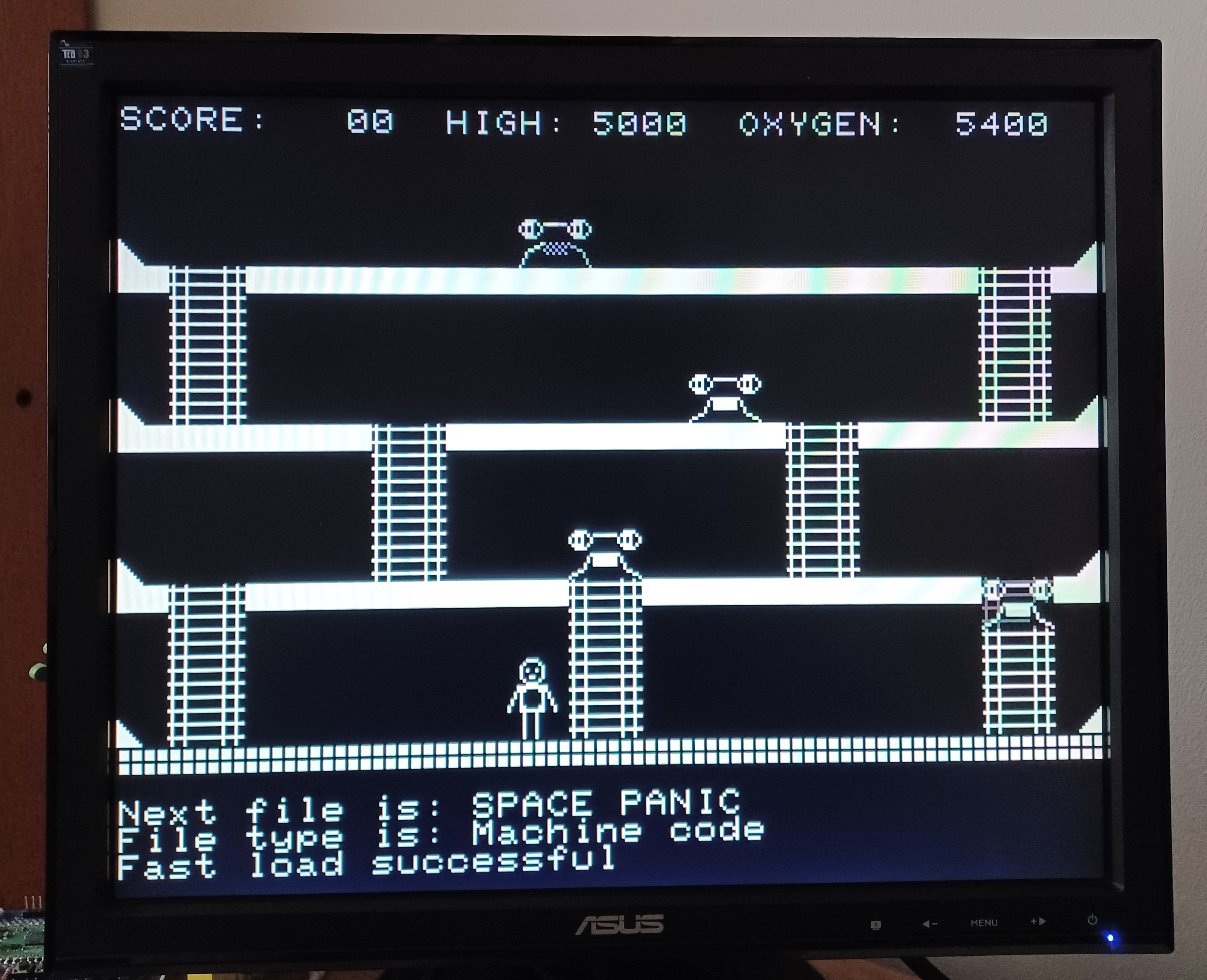
Rant over! I hope you enjoy the Pico MZ release 3.2 and I'd love to hear from you if you try using it. I'm intending to exhibit the Pico MZ at next year's (June 2027) RetroFest UK in Swindon, so that's another way of experiencing it if you don't want to spend the £30 or so on the hardware you'd need to run it for yourself.
As always, you can download the latest release of Pico MZ from here.